Injection is one of the most common and indispensable medical procedures in global healthcare systems. According to the World Health Organization (WHO), approximately 12 billion injections are administered globally each year, with 30% of these injections being unsafe. Behind these numbers lies a significant risk to health and a substantial economic burden. For healthcare workers, needlestick injuries (NSIs) have become one of the most severe occupational hazards worldwide.
Each year, more than 35 million healthcare workers experience over 2 million needlestick injuries, posing severe threats to their occupational safety and increasing the risk of transmissible diseases. WHO research shows that the reuse of syringes and inadequately sterilized needles have become major pathways for infectious diseases, particularly in low-resource regions.
Global statistics on infections due to unsafe injections are alarming:
- Hepatitis B (HBV) infections range from 8 million to 16 million cases.
- Hepatitis C (HCV) infections amount to approximately 2 million to 4.5 million cases.
- HIV infections stand at 80,000 to 160,000 cases.
These figures highlight the severe health risks faced by patients and healthcare workers alike. Moreover, these infection risks carry substantial economic costs. According to U.S. statistics, a single needlestick injury can cost between $800 and $2,000 in testing and follow-up treatment, leading to significant resource waste within the healthcare system each year. This not only affects the efficiency of healthcare systems but also adds to the already heavy global medical expenditures.
To address these issues, the design and adoption of safety syringes have become essential topics in healthcare. Modern safety syringes not only prevent needlestick injuries but also effectively reduce the risk of infectious diseases and lower the occupational exposure of healthcare personnel. Through technological innovation and regulatory support, countries worldwide are introducing safer injection devices to protect both healthcare workers and patients.
Safety syringes represent more than a medical equipment innovation—they embody a commitment to the safety and lives of healthcare workers and patients globally. In this context, promoting and implementing the use of safety syringes has become crucial in addressing healthcare safety challenges.
What Can Taiwan Do for Healthcare Workers?
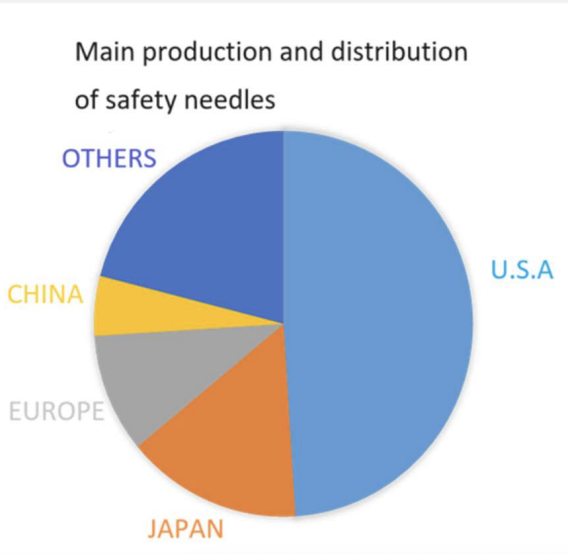
Currently, the main producers of safety syringes are the United States, Europe, and Japan.
In 2021, the U.S. produced 12.511 billion safety syringes, accounting for 49.37% of global production, ranking first worldwide.
What can we do for Taiwan’s safety syringes?
The development of Taiwan's high-standard safety syringes marks our first significant step forward!