In its annual report, the United Nations Educational, Scientific and Cultural Organization (UNESCO) Director-General Audrey Azoulay highlighted the ongoing global water crisis, noting that approximately 2.6 billion people lack sufficient water for sanitation (e.g., wastewater treatment). Without adequate water for sanitation, the crisis has led to the mixing of drinking water with untreated wastewater, a significant factor in the limited availability of safe drinking water, resulting in widespread disease and death from contaminated water.
The health of children in developing countries is particularly affected, with an estimated 3,900 children dying daily from diarrhea. Additionally, there are frequent conflicts across the world’s approximately 260 transboundary river systems.
Projections indicate that by 2025, two-thirds of the global population will lack access to safe drinking water and basic sanitation services. Building wastewater treatment facilities and reducing groundwater usage alone are insufficient solutions. Developing countries should consider simple wastewater treatment facilities or septic systems and focus on analyzing and improving wastewater treatment designs to reduce their impact on drinking water and ecosystems.
Following the United Nations General Assembly, the OECD invited Dr. Yuriko Fujiwara and Dr. Li Ti-Fan to discuss solutions to the global water resource crisis, focusing on “water treatment.” Taiwan, not a water-rich nation, ranks among the world’s top 20 water-scarce countries. The main reasons are as follows: (1) Taiwan’s natural terrain causes 80% of rainfall to be lost, (2) uneven rainfall distribution,
and (3) over-extraction of groundwater, leading to supply challenges. Despite abundant rainfall and being surrounded by the ocean, Taiwan’s geographic and climatic conditions make rainwater retention difficult. Some regions are even experiencing groundwater depletion and land subsidence.
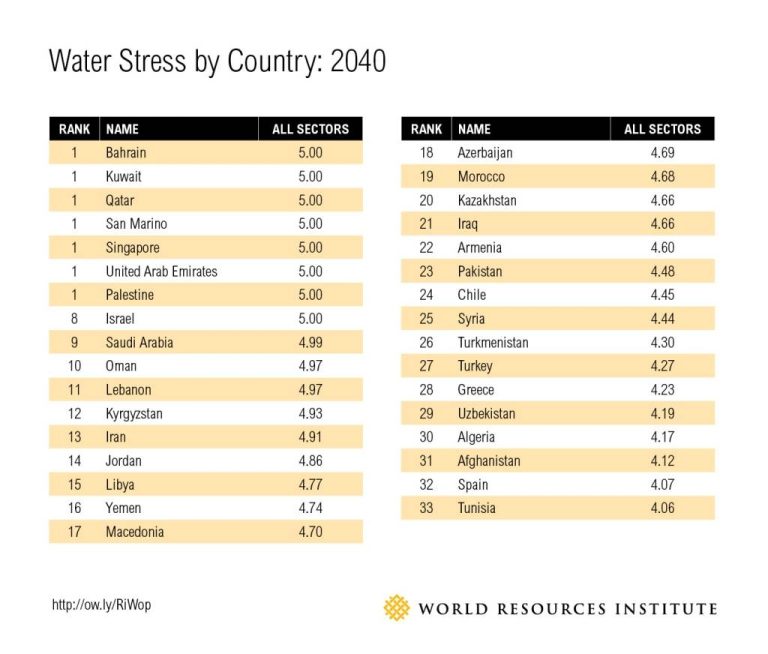
As a result, Taiwan ranks as the 18th most water-scarce country among 146 nations, comparable to desert regions. Taiwan’s capacity to provide “clean water” does not equate to an abundance of water resources. The public lacks awareness of Taiwan’s severe water scarcity ranking, which is 18th globally. Amid the ongoing conflict between Israel and Hamas, access to water has become a crucial strategic issue. The theme for World Water Day 2024 is "Water for Peace"
highlighting that water can be a force for peace but also a source of conflict.